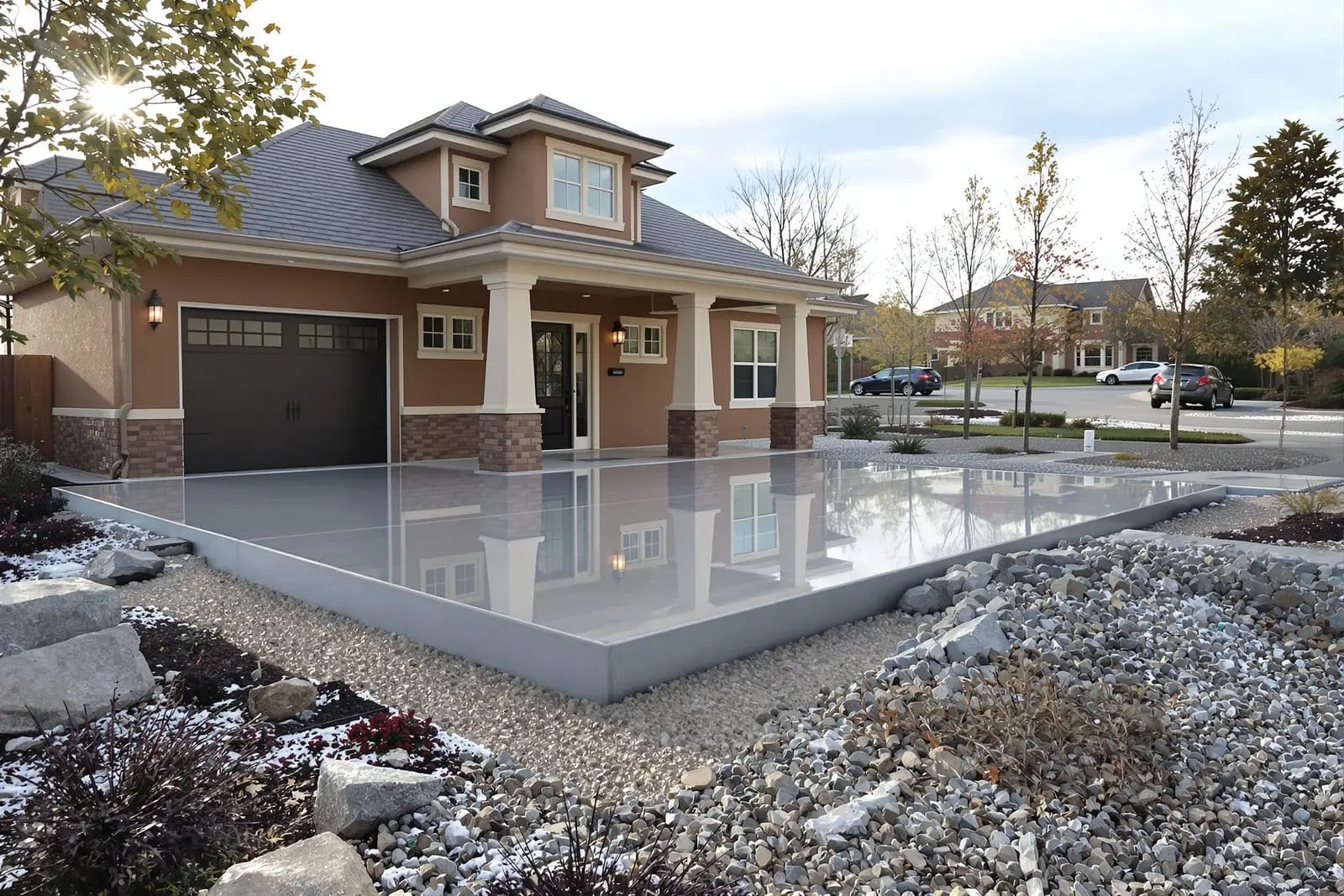
Keep your site functional with quality commercial concrete flatwork in Charlotte, NC. We pour loading pads, building aprons, sidewalks, and equipment slabs with proper reinforcement and finishes for heavy use. Our team focuses on flatness, drainage, and joint layout to minimize cracking and maintenance.
Vanguard Concrete Charlotte provides professional commercial concrete flatwork throughout Charlotte, NC and the surrounding area. Our licensed, insured crew delivers safe, clean, on-time work with a free estimate before anything begins. Call (704) 464-0989 or request your free quote.
Commercial concrete flatwork that holds up to real Charlotte use
Heavy traffic, forklifts, pallet racks, and daily deliveries are hard on concrete. Vanguard Concrete Charlotte designs and installs commercial slabs and flatwork that are built around how your site is actually used, not just what looks good on paper.
When we walk a property in Charlotte, we start with traffic patterns, load types, drainage, and soil conditions. A loading dock in an industrial park off Statesville Road needs different slab thickness and reinforcement than a restaurant patio in South End or a walk-in cooler floor in a convenience store. We look at turning radiuses for trucks, pallet jack paths, tight storage aisles, and where water naturally wants to run during a storm.
From there we recommend a slab section that fits those conditions: thickness (often 4 to 8 inches for typical commercial flatwork, more for heavy loading), rebar or wire mesh layout, possible dowels at joints, and subbase prep. Our goal is to keep your concrete from curling, cracking, or pumping under wheels so you are not shutting down operations later for patchwork repairs.
How we build commercial slabs & flatwork on Charlotte ground
Good commercial concrete flatwork starts long before the first truck shows up. The soil under much of Charlotte shifts from red clay to fill material in a short distance, especially on infill sites or older commercial properties. We test and proof-roll the subgrade so we know where the weak spots are before concrete ever goes down.
The typical process with Vanguard Concrete Charlotte looks like this:
1) Layout and elevation checks. We shoot grades to make sure finished surfaces will tie into existing floors, thresholds, or pavement without trip edges or puddling. This is critical where new slabs meet existing warehouse floors or dock aprons.
2) Excavation and subgrade prep. We cut or fill to the design elevation, then compact the subgrade with plate compactors or rollers. Where soils are soft or pumping, we add a crushed stone base to spread loads and improve drainage.
3) Formwork and reinforcement. We set forms to tight tolerances so slopes are correct and concrete thickness is consistent. Rebar, wire mesh, or fiber reinforcement is installed based on expected loads. For drive lanes and dumpster pads we often use rebar grids and doweled construction joints so slabs stay locked together.
4) Placement and finishing. We coordinate concrete delivery to match pour size and weather. Our crews place, screed, bull float, and then use walk-behind or ride-on trowels for the specified finish. Interior slabs often get a hard trowel finish for forklifts, while exterior flatwork usually receives a broom finish for slip resistance.
5) Joints, curing, and protection. We cut control joints at calculated spacings to manage cracking, then apply curing compounds or wet curing methods so the surface does not dry too fast in Charlotte heat and humidity. We set clear timelines for foot and vehicle traffic so you know when each area can go back into service.
Design and material options for your commercial flatwork
Commercial concrete flatwork is not one size fits all. Vanguard Concrete Charlotte helps you choose the right combination of mix design, reinforcement, and surface treatment so your slab matches its job.
For mix design, we consider compressive strength (often 3,500 to 5,000 psi for commercial slabs), air entrainment for freeze-thaw exposure, and additives like water reducers or accelerators when a job needs to move faster or weather is a concern. Exterior walkways and loading areas in Charlotte see both summer heat and occasional freezing rain, so we lean toward mixes that handle temperature swings without spalling.
Reinforcement choices depend on use. Wire mesh works for lighter duty floors, but for aisles with racking, dock areas, dumpster pads, and fire lanes, we often specify deformed rebar on a grid pattern and doweled edges where slabs meet. For very heavy point loads from machinery or racks, we may tighten bar spacing or increase slab thickness instead of relying on a standard detail.
Surface options are practical first, attractive second. Broom finished walkways and outdoor customer areas provide traction when it rains. Lightly troweled or burnished interior slabs work better for pallet jacks and forklifts because wheels roll smoothly and cleaning is easier. In food service or retail spaces, we can plan for future coatings or polished concrete and adjust the finish so those systems bond correctly later.
We also talk drainage early. Slight slopes, trench drains, or targeted low points can keep water moving away from doors and walls. In older parts of Charlotte where storm systems are already stressed, getting that on-site drainage right helps avoid standing water that breaks down concrete over time.
What affects cost and schedule for commercial concrete flatwork
Two commercial slabs can be the same square footage and still differ a lot in cost. When Vanguard Concrete Charlotte prices commercial concrete flatwork, we walk through the real drivers so you know where your budget is going.
Site access is a big one. If mixers and pumps can get close, we can move faster and keep labor costs down. Tight uptown alleys, active shopping centers, or sites with limited staging often need more labor or smaller pours, which can raise cost per square foot.
Soil and base conditions matter too. If your site has undocumented fill, utility trench backfill, or soft pockets, we may need undercutting, additional stone base, or geotextile to stabilize it. Spending a little more under the slab prevents expensive slab failures later.
Load requirements are another factor. A 4 inch patio for a light retail space will be cheaper than a 7 or 8 inch slab with rebar on tight centers for a distribution center. High rack storage, heavy equipment, or frequent truck traffic all push the design toward thicker sections and more steel.
Schedule can influence both mix choices and labor planning. Night or weekend pours to avoid disrupting tenants, or phased work in active warehouses, often require more supervision and coordination. If you need fast strength gain to reopen drive lanes quickly, that may call for higher cement content or accelerators, which affect material cost.
We spell these items out in our proposals so you can see how changes in thickness, reinforcement, or phasing will change the final number. That way you can weigh long term performance against upfront budget with clear information.
Common slab problems in Charlotte and how we prevent them
Charlotte’s combination of clay soils, summer storms, and temperature swings creates some predictable problems for commercial concrete flatwork. Vanguard Concrete Charlotte designs and builds with these local issues in mind so you see fewer surprises over the life of your slab.
Uncontrolled cracking is at the top of the list. All concrete cracks to some degree, but random wide cracks usually mean poor joint layout, weak support, or bad curing. We calculate joint spacing based on slab thickness and shape, cut joints early, and reinforce appropriately so cracks follow those planned locations instead of wandering across your aisle or entry.
Another common issue is slab settlement along truck paths or near dumpster pads. This often shows up where water softens the support soils or where trash trucks sit in the same spots over and over. We counter this by improving the subbase, using thicker concrete at known heavy load points, and making sure water is directed away from slab edges.
Surface scaling and spalling can appear on exterior slabs that were finished or cured incorrectly, especially when cold snaps follow wet periods. By watching air content in the mix, avoiding overworking the surface, and curing properly, we greatly reduce the risk of the top layer peeling or flaking off.
Curling at slab edges is another concern in large interior floors. This can create bumps at construction joints that forklifts hit day after day. We address this by balancing slab thickness, joint spacing, and reinforcement, and by controlling moisture loss during curing so the top and bottom of the slab dry more evenly.
Before we start work, we walk you through these risks in the context of your specific project, then show how our slab design and construction plan deals with them. The goal is fewer repairs, less downtime, and a slab that matches the way your operation actually runs.
“
Professional commercial slabs & flatwork, done right the first time, quality materials, honest pricing, and results that last.
Vanguard Concrete Charlotte
Commercial Slabs & Flatwork Across Our Service Area