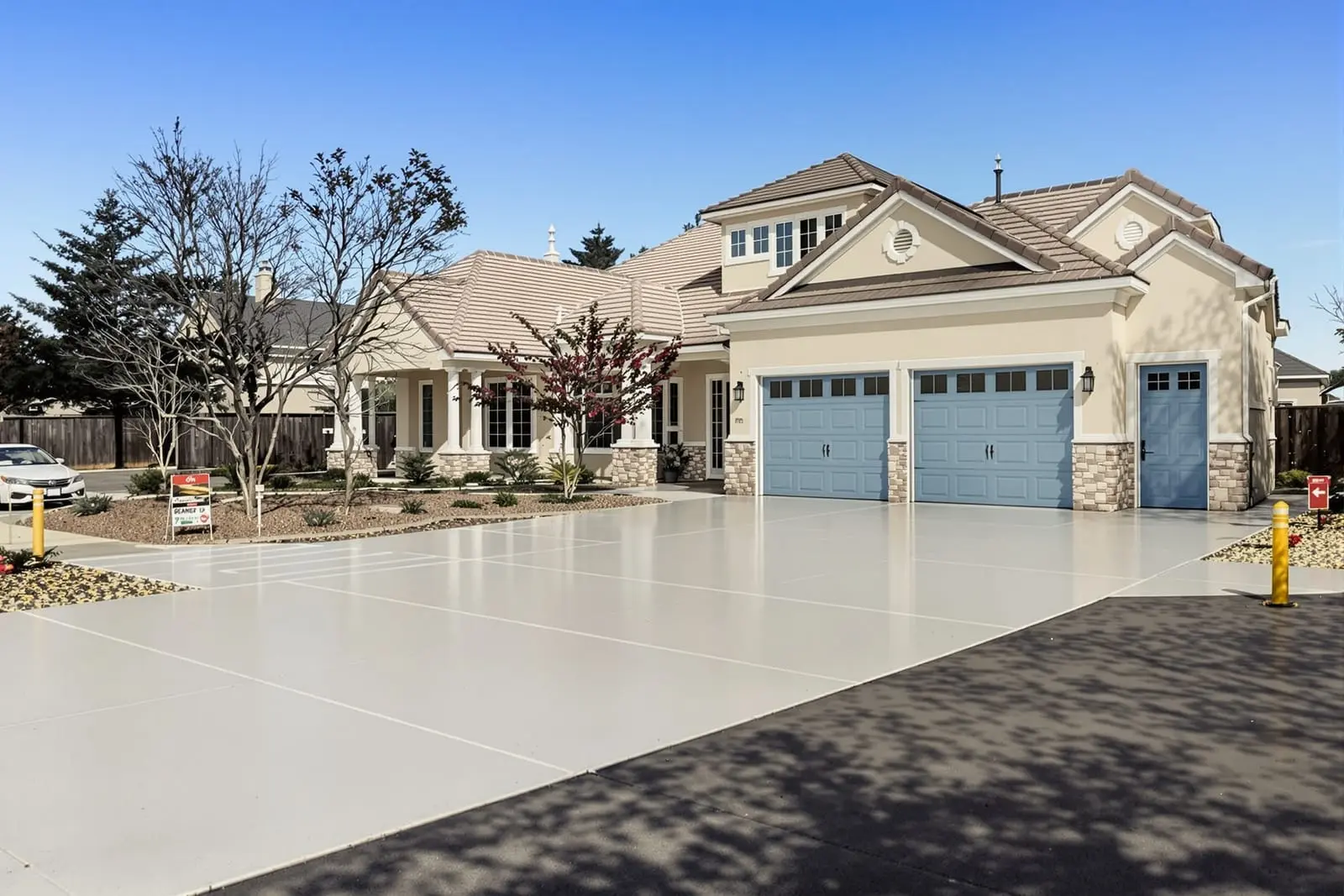
Support your business with reliable commercial concrete paving in Charlotte, NC. We pour heavy duty slabs, approaches, and access drives to handle constant traffic. Our team coordinates layout, grading, reinforcement, and jointing to meet your load and drainage needs. Get long lasting, low maintenance concrete surfaces that keep operations moving.
Vanguard Concrete Charlotte provides professional commercial concrete paving throughout Charlotte, NC and the surrounding area. Our licensed, insured crew delivers safe, clean, on-time work with a free estimate before anything begins. Call (704) 464-0989 or request your free quote.
Commercial Concrete Paving for Charlotte Businesses
Vanguard Concrete Charlotte provides commercial concrete paving built for the way Charlotte properties are actually used. Whether you manage a retail center off South Boulevard, an office park in Ballantyne, or an industrial site near the airport, your pavement has to handle constant vehicle traffic, heavy delivery trucks, and North Carolina’s mix of summer heat and winter freeze-thaw cycles.
Instead of selling a one-size-fits-all product, we start by understanding how your site functions. We look at your traffic patterns, soil conditions, drainage, and any issues with existing pavement like heaving, cracking, or ponding water. From there, we design a commercial concrete paving solution that fits your property and your budget, with clear explanations of the tradeoffs between thickness, reinforcement, and finishing options.
Our team focuses on minimizing disruption to your business. For active facilities, we can phase work so that customers, employees, and deliveries still have a safe way in and out. Communication is constant so you know what areas are open, what is curing, and when each section will be ready for use.
How Our Commercial Concrete Paving Process Works
A successful commercial concrete paving project is more than pouring and walking away. Vanguard Concrete Charlotte follows a detailed process to give your pavement long-term strength.
1. Site assessment and layout: We begin by checking grades, existing utilities, and subgrade conditions. On many Charlotte sites, especially around older industrial areas, we run into mixed fill soils. If the subgrade is soft or pumping, we address that in the plan rather than ignoring it.
2. Demolition and excavation: Old asphalt or concrete is removed with controlled saw-cutting along transition lines so joints stay clean. We excavate to the required depth to accommodate the concrete slab and base and haul off materials to appropriate disposal or recycling facilities.
3. Subgrade preparation and base installation: We compact the native soil to a specified density, then install a graded aggregate base where needed. For heavier truck areas like loading docks, we may increase base depth to reduce flexing and prevent settlement. Proper compaction is critical, so we use plate compactors and rollers, with multiple passes verified visually and, when requested, with density testing.
4. Forms, reinforcement, and joints: We set forms to the finished elevations and slopes required for drainage, then place reinforcement. Depending on the design, this can be rebar grids, welded wire mesh, or fiber-reinforced concrete. We also plan control and expansion joints before concrete arrives so that slab panels are sized correctly and cracks occur in controlled locations.
5. Concrete placement and finishing: We order concrete with the right mix design for your project, typically a higher psi mix for commercial applications. The concrete is placed, struck off, and floated. For parking lots and drives, we usually recommend a broom finish for traction. For warehouse or loading dock areas, we may specify a troweled finish with added surface hardener if forklift traffic is heavy.
6. Curing and protection: Proper curing is what separates long-lasting pavement from early failure. We apply curing compounds or use wet curing methods where appropriate, then set barricades and signage so vehicles do not access the slab prematurely. We provide you with clear cure-time expectations so there is no guesswork about when to reopen each section.
Design Options Tailored to Your Property and Traffic
Commercial concrete paving is not just about thickness; it is about designing the system as a whole. Vanguard Concrete Charlotte walks you through options that affect performance, appearance, and cost.
Thickness and load capacity: For standard car parking, a 4 to 5 inch slab may be sufficient, but for drive lanes used by delivery trucks, garbage trucks, or semis, we typically recommend 6 to 8 inches with steel reinforcement. For heavy industrial sites or fire lanes, the design may be even more robust.
Reinforcement choices: We explain the pros and cons of rebar, welded wire mesh, and fiber reinforcement. For example, fiber-reinforced concrete can help control micro-cracking across large parking areas, while rebar grids are ideal around dumpster pads and loading zones where point loads are higher.
Drainage and grading: In Charlotte, sudden summer storms can overwhelm poorly graded lots. We design slopes to move water toward catch basins or swales and avoid flat spots where ponding occurs. If an existing asphalt lot regularly holds water near entrances or accessible parking, we can correct those grades during concrete replacement.
Surface finish and color: Most commercial sites choose a standard gray broom finish for durability and slip resistance. However, we can add integral color, saw-cut patterns, and decorative borders at walkways or building entrances so the functional paving blends with your storefront or campus design.
Joint layout and long-term appearance: Thoughtful joint layout helps control where cracks occur and how the pavement looks over time. We line up joints with light poles, islands, and building lines so the finished pavement looks intentional instead of random.
Local Conditions That Affect Your Concrete Pavement
Charlotte’s climate and soils create specific challenges that we address in our commercial concrete paving designs. Understanding these local factors helps you make better decisions before you invest.
Climate and temperature swings: Our area sees hot, humid summers and periodic winter freezes. This expansion and contraction cycle puts stress on concrete. We use air-entrained mixes for exterior slabs to better resist freeze-thaw damage and deicing salts, and we plan expansion joints in longer runs so the slab has room to move.
Red clay and variable subgrade: Many Charlotte properties sit on red clay that holds water and becomes slick when disturbed. If this soil is not properly compacted and drained, your pavement can settle and crack. We evaluate the subgrade, often recommending undercutting soft spots and replacing them with compacted stone, especially near dumpster corrals and drive entries where loads are concentrated.
Drainage from adjacent properties: Older commercial areas sometimes have water from neighboring lots flowing across your site. When we design your concrete paving, we look at where water is coming from, not just where it is going. Sometimes the solution is as simple as a concrete valley gutter or adjusting curb lines so water does not stand at entries or dock doors.
Utility conflicts and future access: Many Charlotte sites have extensive underground utilities. We coordinate around cleanouts, water meters, conduit, and shallow utilities so your new concrete does not have to be cut up soon after installation. Where access is inevitable, we can form removable panels or clearly defined sections that make future repairs cleaner and less disruptive.
Cost Drivers, Scheduling, and Minimizing Business Disruption
Commercial concrete paving is a significant investment, so it helps to understand what really drives cost and timeline. Vanguard Concrete Charlotte is transparent about these factors so you can prioritize.
Main cost drivers: Thickness of the slab, amount and type of reinforcement, base preparation, and site access all influence cost. Replacing an existing lot that has good subgrade and easy access for trucks will cost less than building new paving on soft, wet soils that require undercutting and extra stone. Complex phasing to keep your site open can also add labor time, which we detail in our proposal.
Permits and inspections: In the Charlotte area, some commercial paving projects require city or county approvals, especially if drainage or parking layout is changing. We can help coordinate with your engineer or architect, and when required, meet inspectors on-site to address any questions about thickness, reinforcement, or ADA compliance.
Project scheduling: We plan work around your business operations. For retail and restaurants, that may mean doing demolition and pour work early in the morning or in off-peak days. For industrial and office parks, it may mean scheduling around shift changes or deliveries. Weather is always a factor for concrete work; we monitor forecasts closely and will not pour when conditions would compromise strength or finish.
Business continuity and safety: During construction, we set up clear barricades, cones, and signage to protect customers and employees. Where needed, we create temporary gravel paths or ramps to maintain ADA compliant routes to entrances. We coordinate with you daily so your team knows which areas are off-limits and when changes will occur.
Lifecycle cost perspective: Concrete paving generally has a higher upfront cost than basic asphalt, but lower long-term maintenance, especially in high-load areas. We help you compare scenarios, such as building a thinner, partially reinforced slab now versus a thicker, fully reinforced slab that is designed to last significantly longer with minimal repairs.
Why Charlotte Businesses Choose Vanguard Concrete Charlotte
Choosing a contractor for commercial concrete paving affects how your property looks and functions for decades. Vanguard Concrete Charlotte focuses on long-term performance, clear communication, and respect for your daily operations.
Commercial focus: Our team is used to working in active commercial settings, from small retail lots to large industrial yards. We understand fire lane requirements, accessible parking layouts, dumpster pad design, and how trucks actually maneuver on real sites, not just on paper.
Clarity and accountability: Before we start, you receive a written scope with slab thicknesses, reinforcement type, joint spacing, and curing expectations, not vague descriptions. On-site, the crew leader is available to walk the project with you, adjust minor details like joint alignment or edge transitions, and explain what is happening at each stage.
Local relationships and reliability: As a Charlotte based company, we rely on ongoing relationships with property managers, facility directors, and business owners. Much of our work comes from repeat clients and referrals, which keeps us focused on consistent quality rather than one-time jobs.
Support after the pour: Once your concrete is in service, we can help with sealing schedules, striping and re-striping, minor crack repairs, and future expansions. If you see anything that concerns you during the first seasons, we inspect it with you and explain whether it is normal concrete behavior or something that needs attention.
If you need commercial concrete paving anywhere in the Charlotte, NC area, from Matthews and Mint Hill to Huntersville and Gastonia, Vanguard Concrete Charlotte is ready to plan, pour, and protect the pavement your business depends on.
“
Professional commercial concrete paving, done right the first time, quality materials, honest pricing, and results that last.
Vanguard Concrete Charlotte
Commercial Concrete Paving Across Our Service Area